
Published Books
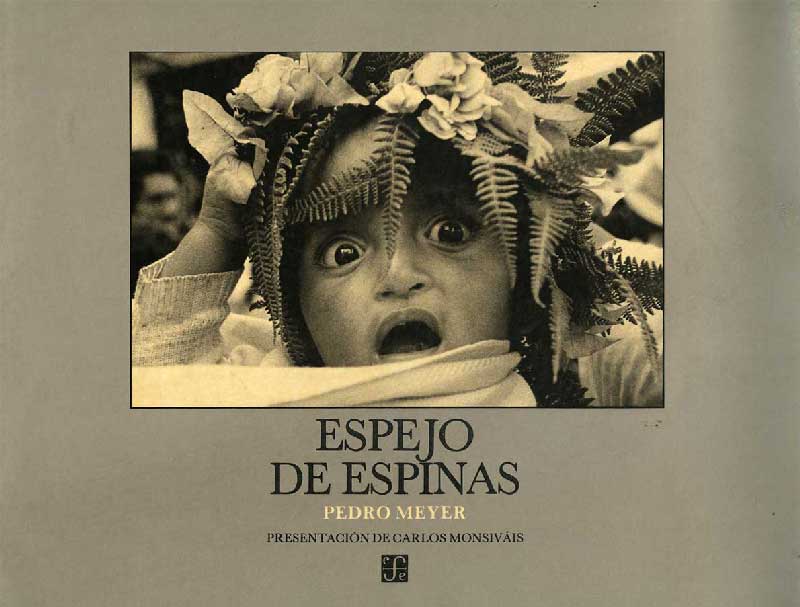
Espejo de Espinas (Mirror of Thorns)
(Fondo de Cultura Económica, 1986), Foreword by Carlos Monsiváis.
This book is part of the Río de Luz collection, which brings together photographs by Pedro Meyer that narrate stories through the faces portrayed, situated in a context where religion constitutes an essential element of daily life.
“[…] Meyer prefers to record the moment in which the borders between the sacred and the profane, between what is believed and what is perceived, between what is inherited and what is forgotten, are blurred,” writes Carlos Monsiváis in the introduction.
Espejo de Espinas was published along with other works by authors such as Graciela Iturbide, Manuel Álvarez Bravo, Hugo Cifuentes, Héctor García, among others. The Río de Luz series, coordinated by Pablo Ortiz Monasterio, was widely recognized for the quality of its editing and curation, considered a prominent reference of Latin American photography. In 1985, the International Center of Photography in New York recognized the Fondo de Cultura Económica for the outstanding editorial work of the collection.
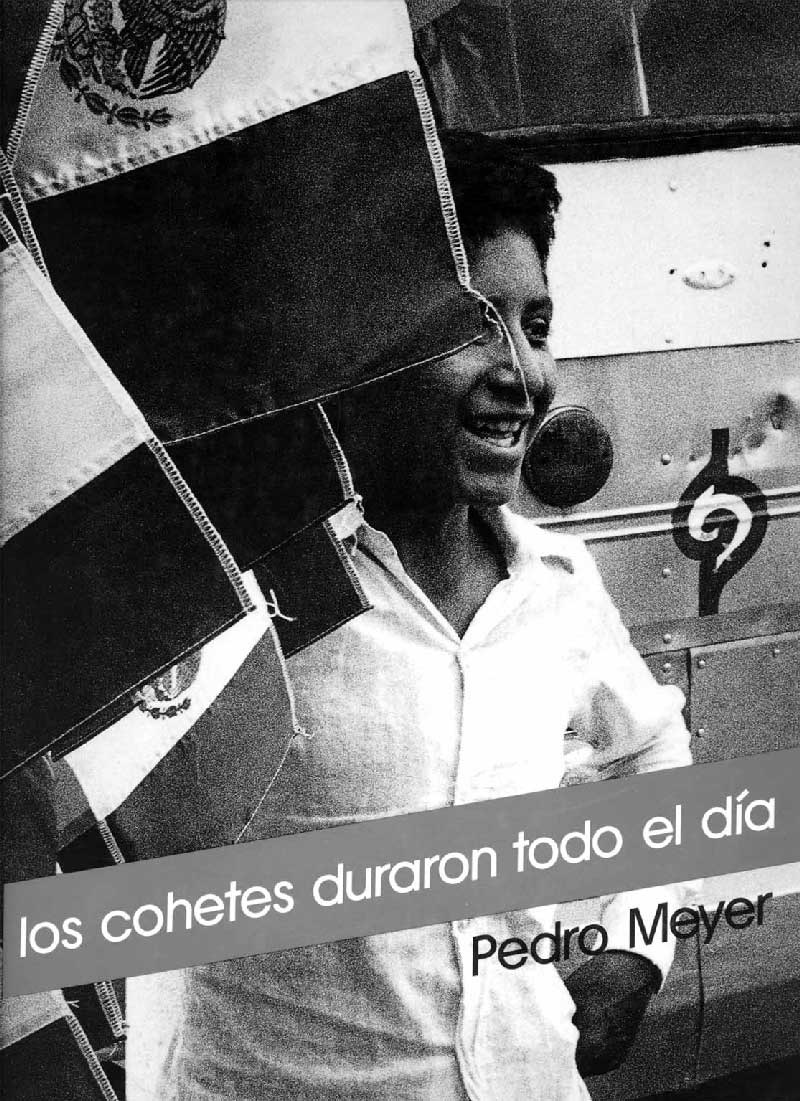
Los cohetes duraron todo el día (The Rockets Lasted All Day).
(Pemex, 1988) edited by Pablo Ortiz Monasterio.
Book commissioned by PEMEX for the 50th anniversary of the Oil Expropriation of 1938. The book was censored by the government of Salinas de Gortari for the exaltation of the figure of Lázaro Cárdenas, former president of Mexico whose son, Cuauhtémoc Cárdenas, was a relevant figure in the opposition of the Salinas government. The book is a great journey through the oil industry and its faces.
The Oil Expropriation and the creation of Pemex was a fundamental event in the Mexican history of the 20th century, since it made possible what was known as the “period of well-being” and an era of stable prosperity that allowed a modernization of the country.
In 2025, a digital re-edition of this book was presented.
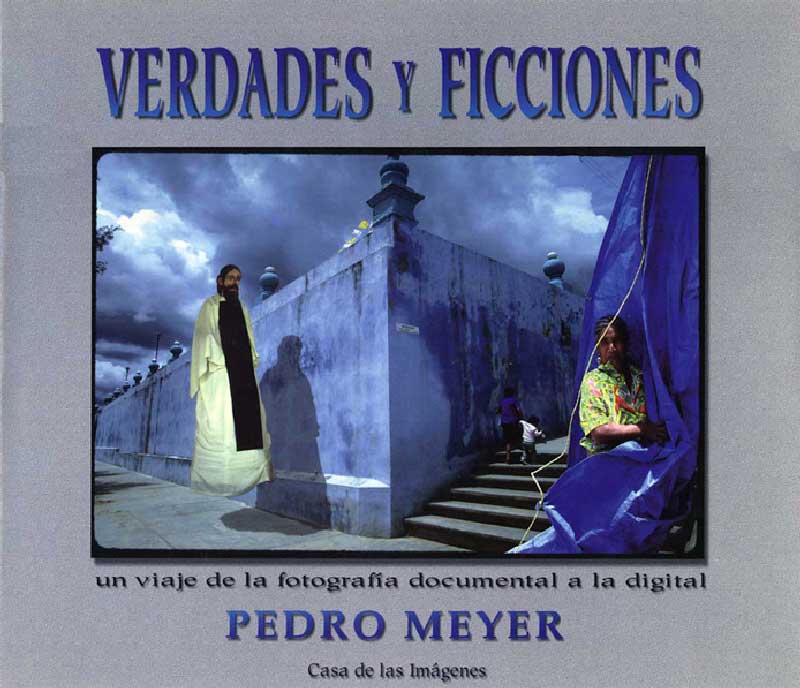
Verdades y ficciones. Un viaje de la fotografía digital a la documental (Truths and Fictions: A Journey from Digital to Documentary Photography).
(Casa de las imágenes, 1995) Introduction by Joan Fontcuberta.
“Photographs are not responsible for corroborating our truth or establishing our power of reasoning, but exclusively for questioning the hypothesis on which others may base their truth,” is how Joan Fontcuberta describes this book, where Pedro Meyer brings together the characteristics of opposite but close poles: the United States and Mexico, which, in turn, are accompanied by complementary visions, analog and digital photography. Visions that, through this fusion within the image, invite the viewer to reflect on the nature of the photographic medium and its mutation from a photochemical origin to the digital and the distinction between the truth of documentary photography and fiction.
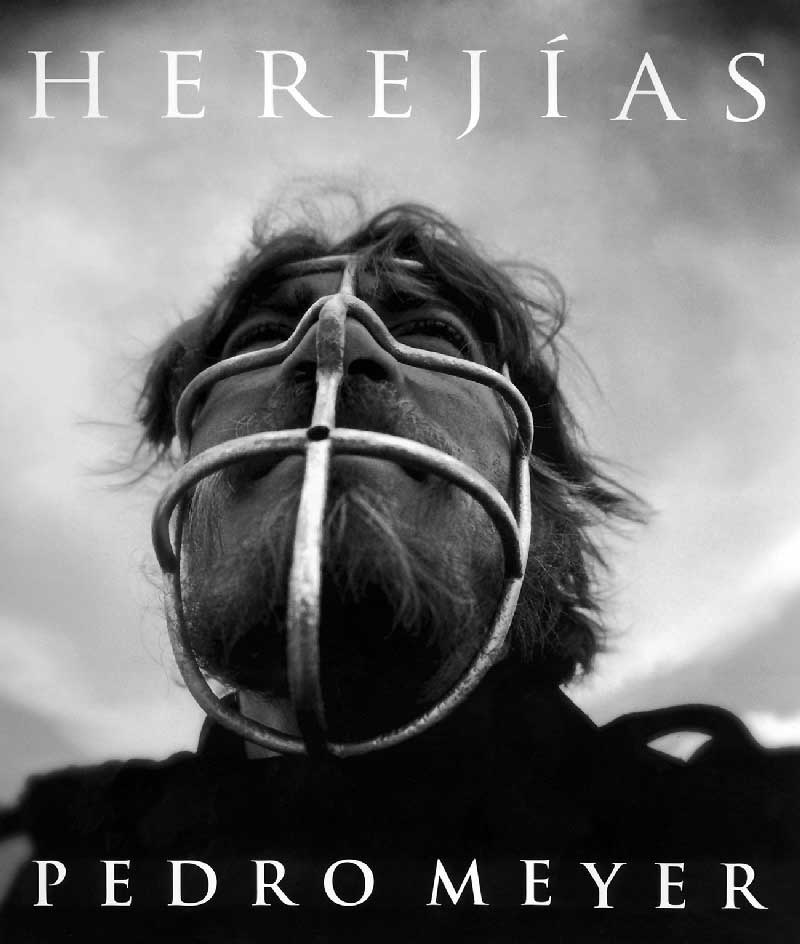
Herejías (Heresies)
(Fundación Pedro Meyer y Lunwerg Editores, 2008).
This book was published as a catalog for the author’s retrospective; however, Herejías is, in essence, a prospective. His gaze is not directed to the past, but to the future. The work confronts us with what its creator has observed throughout his life, reorganizing it and summoning us to look again and again, always anew.
In 2008, Pedro Meyer published Herejías as part of an ambitious international project that included simultaneous exhibitions in more than 60 museums around the world. The work was conceived not only as a retrospective, but as a reflection on photography in the digital age, a subject in which Meyer was a pioneer. The author distributed a selection of his archive (more than 2,000 images) online, allowing curators in each country to freely select which photographs to exhibit. This model broke schemes: not only global simultaneity, but curatorial diversity from a shared bank of images.
The book and the exhibition sought to show the breadth of his career, question the limits between documentary and digitally manipulated photography, and open a dialogue about the future of the image in a time of profound technological and cultural transformations.
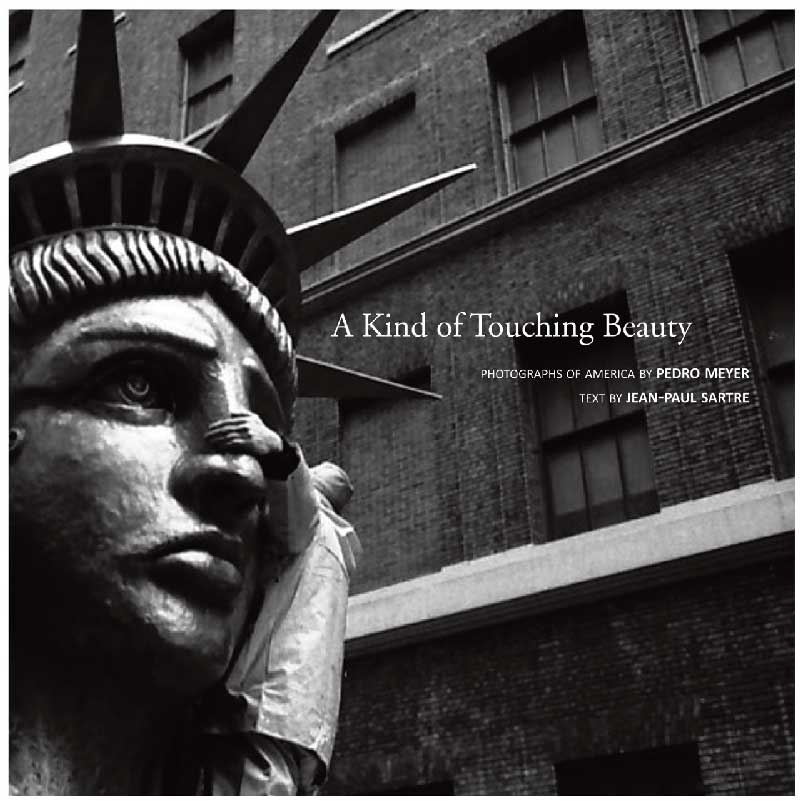
Cover of the book A Kind of Touching Beauty (Seagull Books, 2011)
Text by Jean-Paul Sartre, photos by Pedro Meyer.
A Kind of Touching Beauty
(Seagull Books, 2011) Text by Jean-Paul Sartre
A Kind of Touching Beauty by Pedro Meyer reflects on daily life in American society, success and American consumerism, from different perspectives, but which still manage to meet in a cold and individualistic society.
In this book, the bold gaze of Pedro Meyer is accompanied by the essay written by Jean-Paul Sartre in 1945.
Even belonging to different eras, Sartre’s lines and the images captured by Pedro Meyer between 1980 and 1990 are articulated in a new narrative. Many of the photographs, taken in various locations in the United States visited by Sartre, dialogue with a cultural context different from the one the philosopher knew, however, the photographs are what mark the pulse and meaning of the written narration.
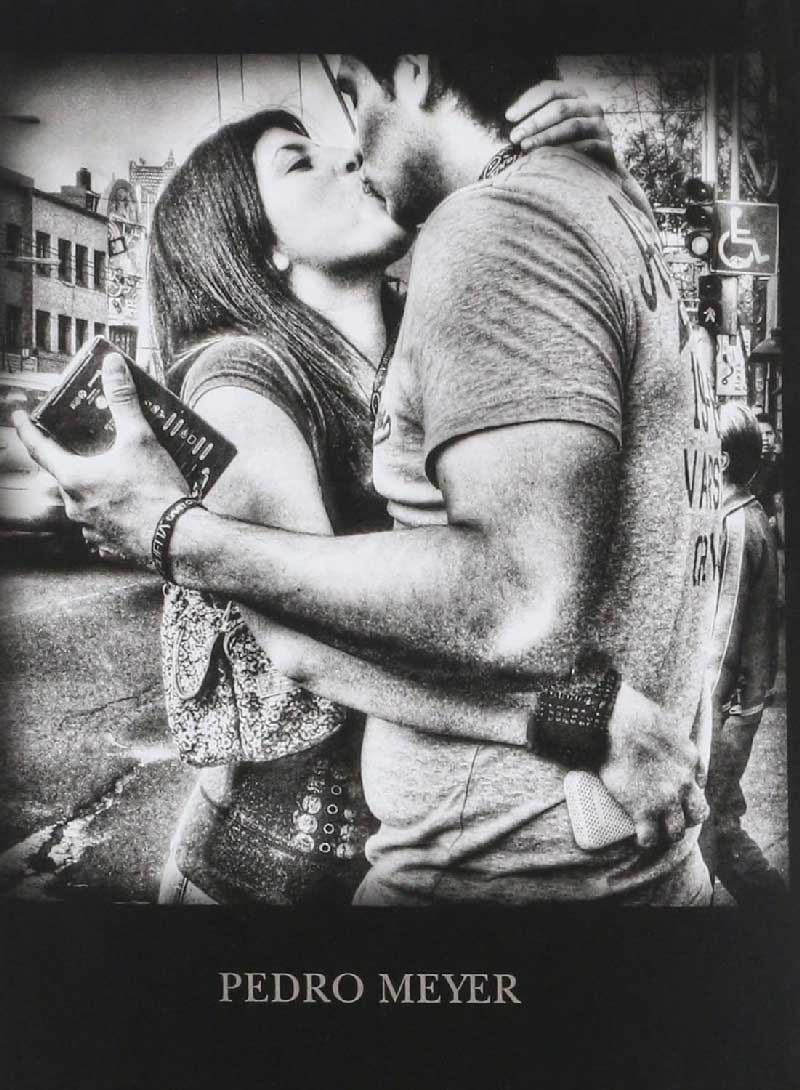
La perfección del desastre (The Perfection of Disaster)
(Secretaría de Cultura, colección Círculo de Arte, 2016) (Secretariat of Culture, Círculo de Arte collection, 2016)
portrays the vibrant chaos of the Historic Center of Mexico City. Through black and white photographs in HDR format, Pedro Meyer captures scenes where markets, dancers, crowds, urban costumes and endless simultaneous stories coexist.
The book, composed of postcard-sized photos that can be read in any order, shows how the inhabitants of Mexico City coexist with disaster as an inseparable part of their daily lives. With a prologue by Martín Solares and the coordination of Pablo Ortiz Monasterio, this pocket edition was published by the Dirección General de Publicaciones de Conaculta (General Directorate of Publications of Conaculta).
In the introduction, Martín Solares points out that the photographer is no longer a hunter of instants, but a director capable of creating imaginary realities. In this sense, Meyer distances himself from the “decisive moment” to merge several moments at once and construct an alternative reality: a fragmented, contradictory and fascinating metaphor of a country that lives between fiction and disaster.

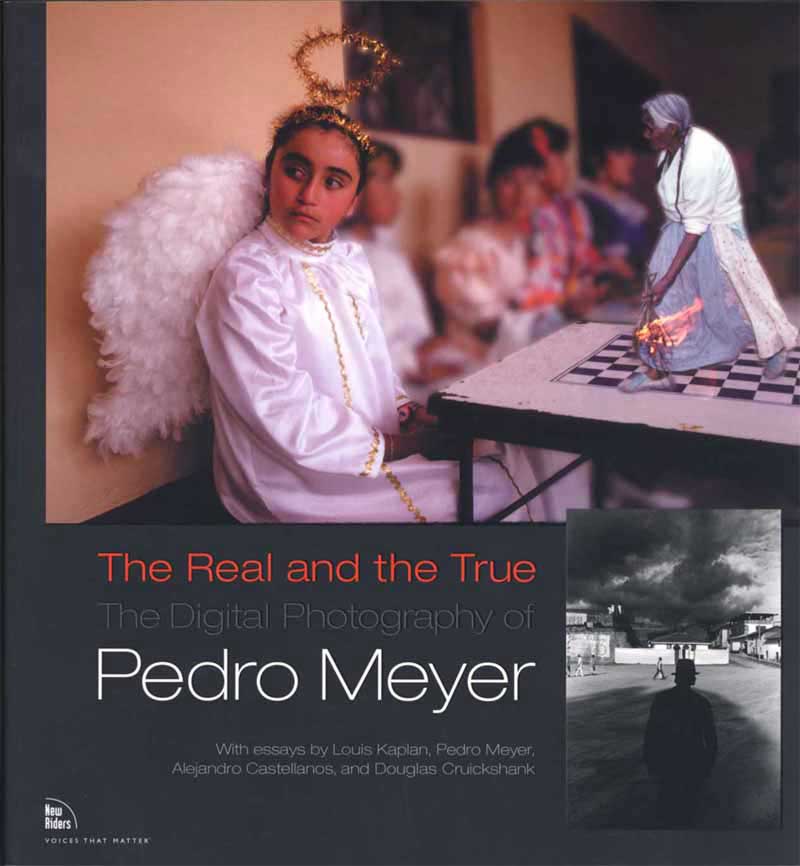
Verdad y realidad en la fotografía (Truth and Reality in Photography)
Prawda i rzeczywistość w fotografii / The Real and the True: The Digital Photography of Pedro Meyer, (2006, New Riders.)
It was published in 2006 in the United States by New Riders. The book by Pedro Meyer contains essays by Louis Kaplan, Alejandro Castellanos and Douglas Cruickshank, is available in English and has a Polish edition in the same year.
It includes more than 200 images, critical essays and explanation of the digital methodology used by the author. The work addresses the relationship between photography and reality, generating debate among photographers and those who are not professionally dedicated to this discipline. It is frequently discussed in terms of “Manipulation!”, “Photoshop!” or “lie!”, but the book offers a constructive approach with solid and documented arguments. Pedro Meyer asks: “Isn’t it time to accept that photographs have never told the truth about anything?”. The work invites us to reflect on the limits of what is allowed in photography and how it has changed since the darkroom was replaced by the computer.
The book combines essays by Meyer and other authors, showing his evolution from documentary photography to digital collages. Includes editorials published in ZoneZero, interviews with Ken Light and critical analysis by Alejandro Castellanos. Many photographs present two dates at the end of the caption, as in El narrador, Magdalena Jaltepec, Oaxaca, 1991/1992. The first date corresponds to the year in which the original photograph was taken; the second indicates the year in which Meyer digitally modified it, reflecting subtle changes that may not be evident to all viewers.
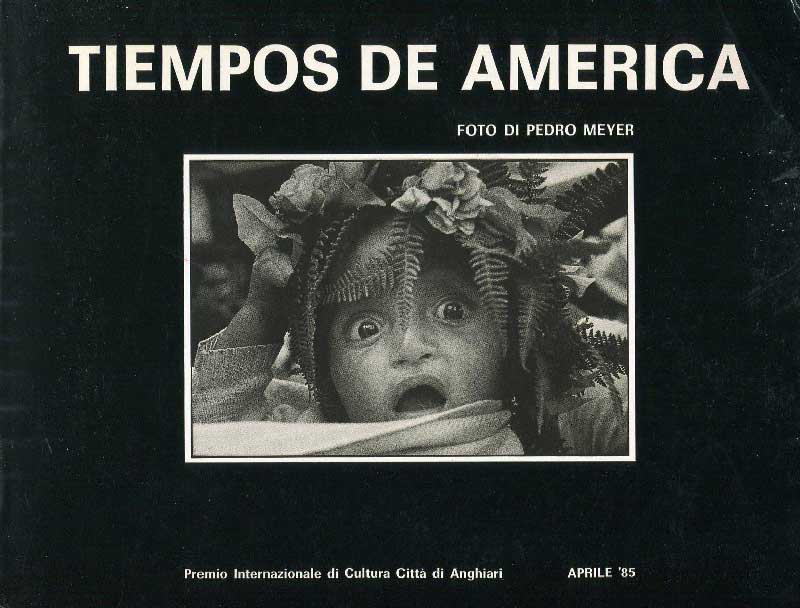
Tiempos de América, Pedro Meyer (Times of America, Pedro Meyer)
(Italia,1985) (Italy, 1985)
The prestigious International Prize for Culture “Città di Anghiari”, one of the most prestigious awards in Italy in the field of culture, was awarded in April 1985 to the work of Pedro Meyer.
On the occasion of this recognition, the Anghiari Committee published the book Tiempos de América, which brings together the images presented in the exhibition of the same name, held in October 1985 at the Studio Ricerca Aperta. The exhibition was organized in collaboration with Il Diaframma Canon and the Premio Internazionale di Cultura “Città di Anghiari”.
The book Tiempos de América brings together images that capture the complexity of the Latin American continent, addressing themes such as religiosity, social inequalities, the vitality of marginalized sectors and the Sandinista revolution in Nicaragua. With a strong and refined visual style, and a carefully constructed composition, Pedro Meyer achieves photographs that move between surrealism and hyperrealism. His work offers a deep portrait of the cultural contradictions of Latin America in an exercise that also reveals his own personal search.