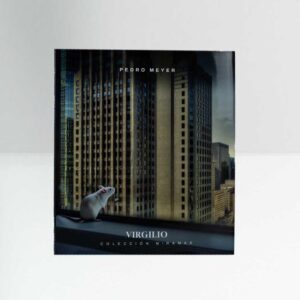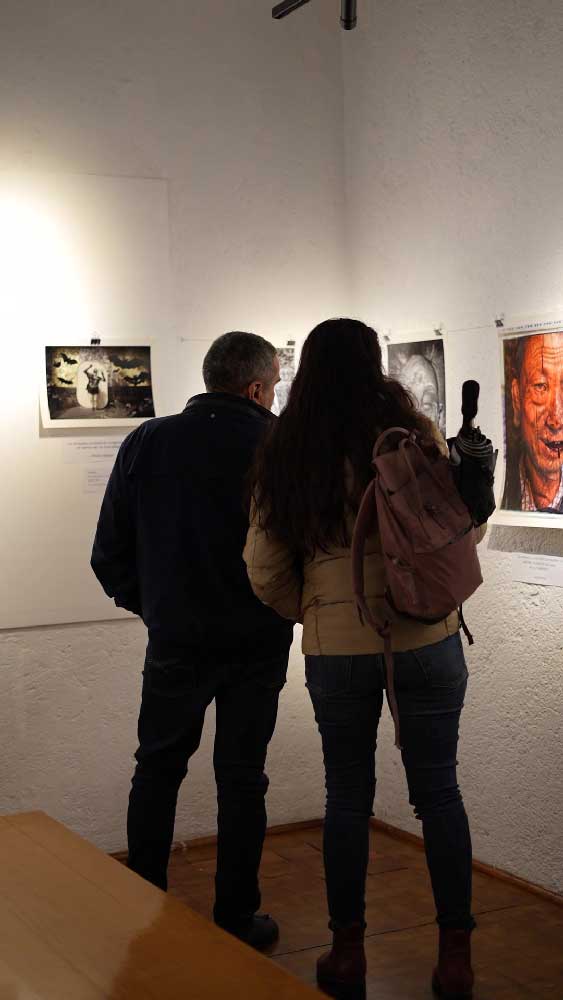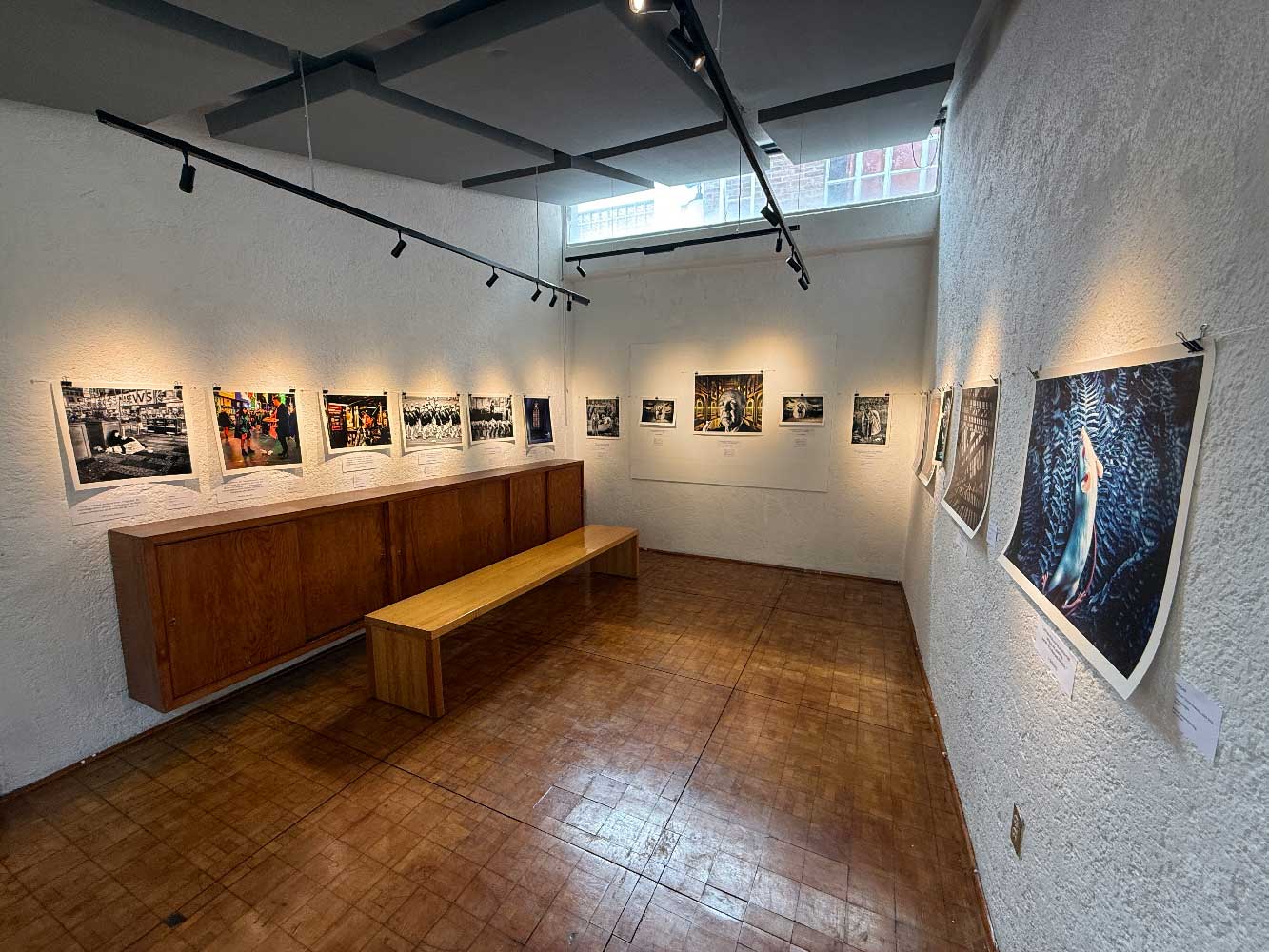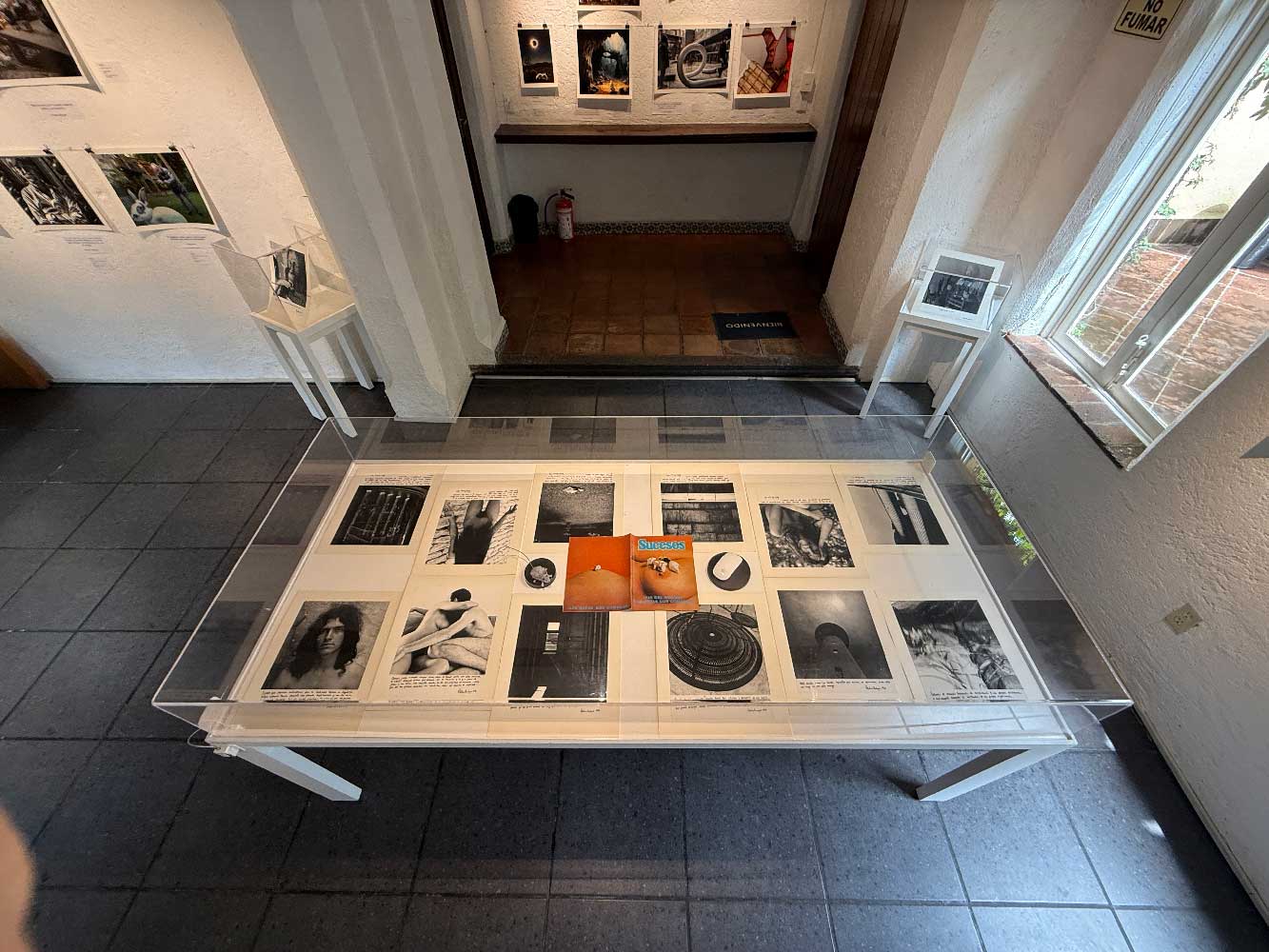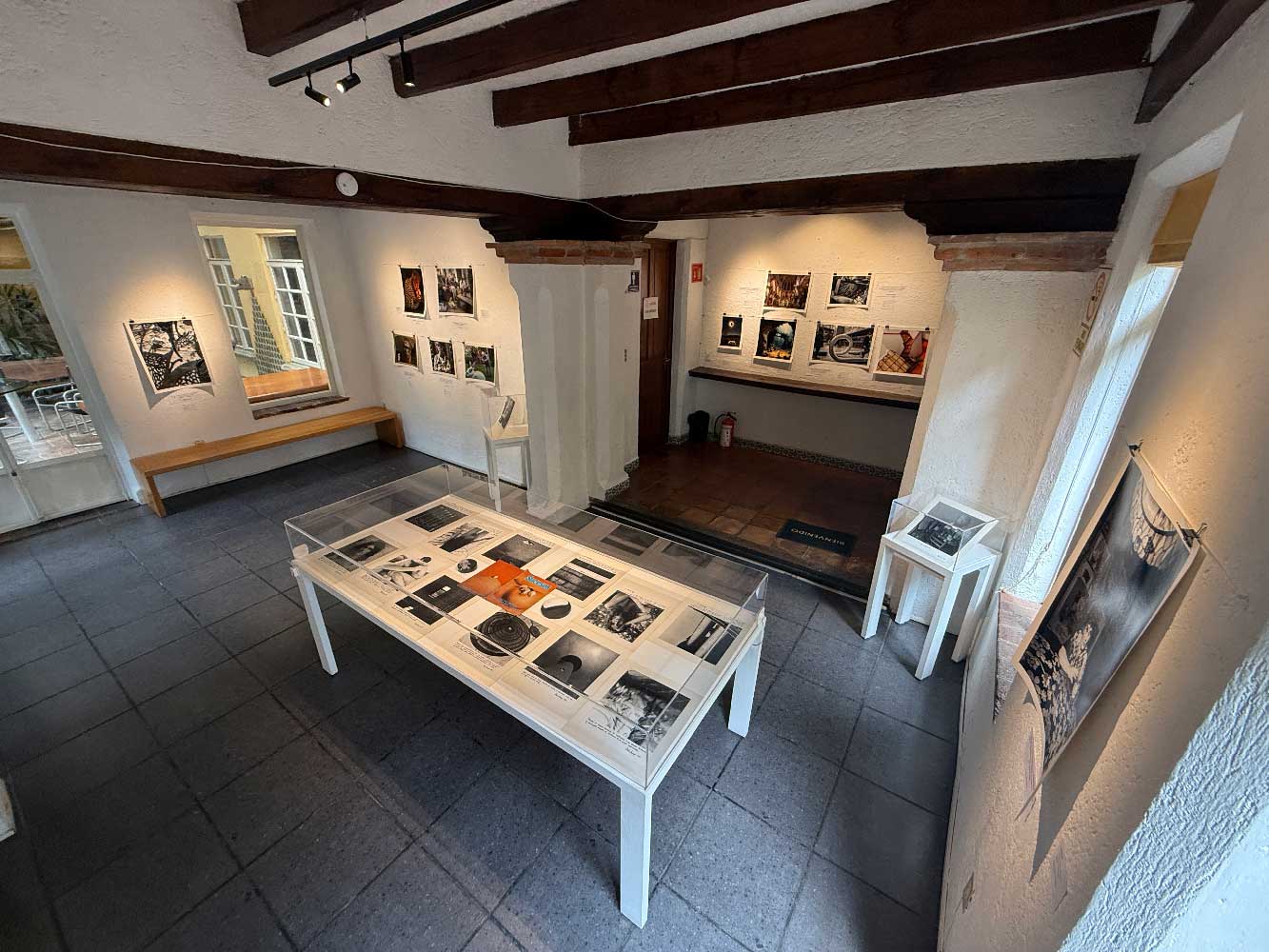
In Virgilio, Pedro Meyer invites us to explore an intimate and fantastic universe where image, word, and memory intertwine.
Guided by a mouse —an improbable heir to Virgil, the poet who accompanied Dante— we traverse scenes where the everyday becomes symbolic and the brevity of the aphorism opens doors to great truths.
This volume is not just a collection of photographs: it is an intricate web of minimal stories, ancient wisdoms, and present-day technologies.
The mouse, a central figure in the book and the author’s childhood, reappears thanks to artificial intelligence to explore cathedrals, cities, and corners of the world with a gaze as innocent as it is critical.
The images we see do not seek to document, but to provoke. They confront us with a “grammar of estrangement”: familiar spaces, but seen from a different scale and sensibility. Like a visual haiku, each scene condenses humor, melancholy, irony, and wonder.
Virgilio is a tribute to the small guides —mice, aphorisms, memories— that orient us in times of noise and algorithms. In this game of mirrors between the ancestral and the artificial, Pedro Meyer reminds us that imagining remains a profoundly human act.